

Every week, someone working at a beauty supply counter has the same conversation. A salon owner calls to reorder “the eyebrow stuff” and that single phrase could mean two genuinely different products, with different application methods, different results, different shelf lives, and different regulatory considerations.
Eyebrow henna and eyebrow tint are not interchangeable, even though they often sit on the same shelf, get ordered from the same supplier, and serve a broadly similar purpose colouring and defining eyebrows. The confusion between the two is so common that it shapes a lot of what eyebrow henna distributors and eyebrow tint distributors spend their time doing: not selling, but explaining.
This article lays out what salons and brow technicians genuinely need to understand about the difference between these two products not from a marketing angle, but from the perspective of the people who supply both, deal with the returns when the wrong product gets ordered, and field the questions when a client’s brows do not look the way the technician expected.
What Eyebrow Henna Actually Is
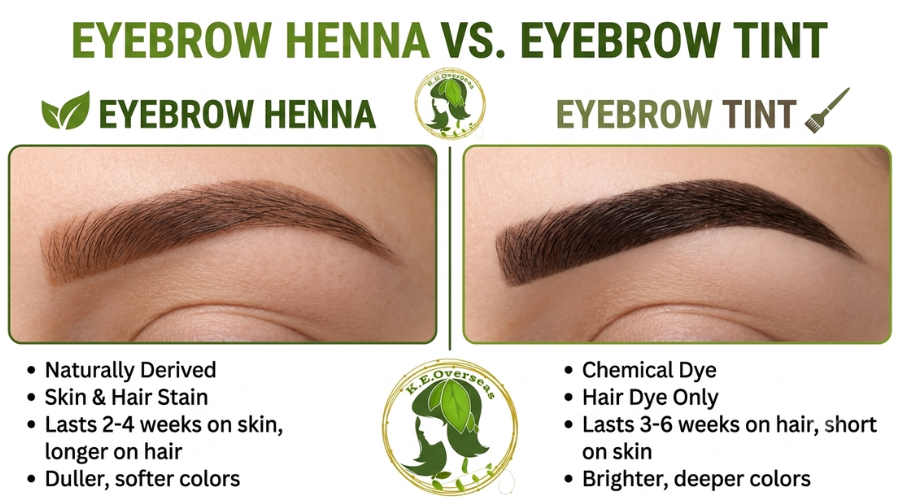
Eyebrow henna is a plant-based dye, traditionally derived from the Lawsonia inermis plant the same source as the henna used for hand and body art, though formulated and processed differently for cosmetic eyebrow use. The pigment in henna stains the skin as well as the hair of the brow, which is the defining characteristic that separates it functionally from tint.
When henna is applied to the eyebrows, it does two things simultaneously. It deposits colour onto the hair shaft, and it stains the skin underneath and around the brow. This skin staining is temporary typically lasting anywhere from a few days to around a week, depending on skin type and aftercare but it creates an immediate fuller, more defined brow shape because the colour extends slightly beyond just the hairs themselves.
For clients with sparse brows, over-plucked brows, or gaps in their brow shape, this skin staining effect is often the entire appeal. The henna fills in those gaps visually in a way that colouring the hair alone cannot achieve. This is why henna brow treatments have become particularly popular for clients seeking a fuller, more architectural brow look without committing to permanent makeup or microblading.
What Eyebrow Tint Actually Is
Eyebrow tint is a cosmetic colourant formulated specifically to colour hair the eyebrow hairs themselves without the same skin-staining effect that henna produces. Tint typically uses oxidative dye technology, similar in principle to hair colour, where the product is mixed with a developer and processed for a set time to deposit colour into the hair shaft.
Because tint is designed to colour hair rather than skin, the result is more about enhancing and defining the natural brow hairs that are present rather than creating the illusion of additional brow where there is none. For clients with naturally fuller brows who want to darken, enrich, or add dimension to their existing brow colour, tint achieves exactly that a natural-looking enhancement of what is already there.
Tint results typically last several weeks on the hair itself, though this varies depending on hair growth cycles and how quickly the tinted hairs are replaced by new, untinted growth. Unlike henna, there is minimal to no skin staining with most tint formulations, which means the finished look is more subtle and closer to the client’s natural brow shape and density.
The Confusion Point Distributors Encounter Constantly
Salons Ordering the Wrong Product for Client Demand
The single most common issue that eyebrow henna distributors deal with is a salon discovering, after the fact, that their client base is asking for a service the salon has not stocked the right product for. A salon that has built a strong tinting service finds clients increasingly asking for “the henna brow look” they have seen on social media fuller, more defined, with that characteristic skin-tint halo effect and the salon’s existing tint product simply cannot replicate it, no matter how it is applied.
The reverse happens too. A salon stocks henna because of demand for the fuller brow look, but a portion of their clientele particularly those with already full, dark brows who just want a subtle refresh find henna results too dramatic or are uncomfortable with the visible skin staining in the days following treatment, even though it fades.
Patch Testing and Allergy Considerations Differ
Both henna and tint require patch testing before use, but the considerations differ. Tint formulations, particularly those using oxidative dye technology, can contain ingredients like para-phenylenediamine, commonly abbreviated as PPD, which is a recognised allergen for a portion of the population. Salons using tint need robust patch testing protocols and should be working with eyebrow tint distributors who can provide clear ingredient information and PPD-free alternatives where needed.
Henna, being plant-derived, has a different allergen profile, though commercial eyebrow henna products are formulated cosmetic products and not pure raw henna they may contain other ingredients that require their own patch testing consideration. Distributors who supply both categories spend considerable time helping salons understand that “natural” does not automatically mean “no patch test needed,” and that both product categories carry their own specific testing requirements that should never be skipped, regardless of how many times a particular client has had the treatment before without issue.
What This Means for Stocking Decisions
Stocking Both Is Often the Right Answer But Not the Same Volumes
For salons serving a varied clientele, stocking both eyebrow henna and eyebrow tint is increasingly the standard approach rather than choosing one over the other. The two products serve genuinely different client requests, and a salon offering only one is turning away a portion of bookings without realising it.
What distributors see less often is salons matching their stock volumes to actual service demand. A salon might stock equal quantities of henna and tint shades, when their booking data if they looked at it would show a clear skew toward one service over the other in their specific client base. Working with eyebrow tint distributors and eyebrow henna distributors who can provide guidance on typical usage rates per treatment, and who track which shades and formulations move fastest, helps salons avoid both stockouts of popular products and waste on slow-moving shades that expire before they are used.
Shade Range Considerations
Henna and tint shade ranges do not map directly onto each other, which catches out salons trying to offer “matching” options across both product types. A henna shade that produces a warm reddish-brown result on the skin staining may correspond to a tint shade that reads cooler or lighter on hair alone, because the two products are depositing colour onto different substrates skin versus hair which interact with pigment differently.
Salons building a shade range across both categories benefit from testing combinations directly rather than assuming a shade name or number corresponds equivalently between a henna product and a tint product, even from the same brand family. A good distributor relationship includes access to shade charts that show realistic before-and-after results on a range of skin tones and natural brow colours, not just swatches on paper.
Training and Technique Where the Real Value of a Good Distributor Shows
Application Technique Differs Significantly
Henna application typically involves a thicker, paste-like consistency applied with precision to control exactly where the skin staining occurs technicians need to work carefully around the edges of the desired brow shape because the henna will stain wherever it touches skin, including outside the intended shape if applied carelessly.
Tint application is generally more forgiving in terms of precise edge control since the skin staining effect is minimal, but timing becomes more critical leaving oxidative tint on for too long or too short a time directly affects the depth of colour achieved on the hair, and different hair textures process tint at different rates.
Why Distributors End Up Doing Training
Because the techniques differ so significantly, many eyebrow tint distributors and eyebrow henna distributors find themselves providing training resources, technique videos, or in-person demonstrations as part of their service not because salons cannot apply products, but because a salon switching from one product category to the other, or adding a second category to their existing service menu, needs technique guidance specific to that product, not generic brow treatment advice.
A distributor who treats this training as part of the relationship rather than an optional extra tends to see fewer returns, fewer complaints about inconsistent results, and salons that reorder confidently because they understand what to expect from the product they are using.
The difference between eyebrow henna and eyebrow tint is not a technicality that only matters to suppliers it shapes what clients actually see in the mirror, how long that result lasts, what patch testing is required, and whether a salon’s service menu genuinely matches what their clients are asking for.
Before placing your next stock order, take a look at your actual booking requests over the past few months. If clients are specifically asking for fuller, more defined brows with that characteristic skin-tint effect, and your current product range cannot deliver that, the conversation with your supplier is not just about reordering it is about whether your current stock matches your current demand. A good distributor relationship is one where that conversation happens before the gap shows up in your booking calendar, not after a client walks out disappointed.